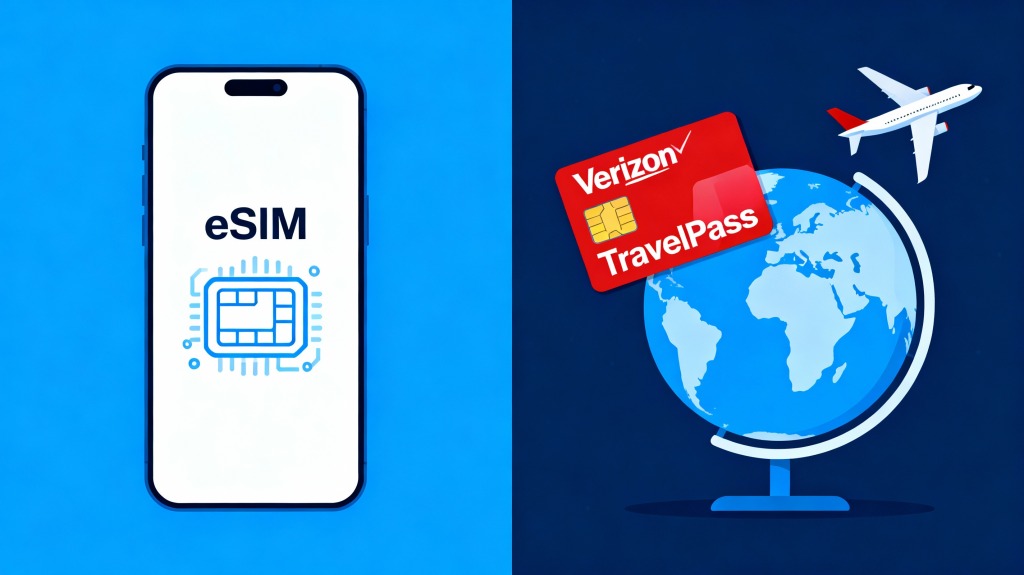
When planning international trips, staying connected is essential. With smartphones being the lifeline for navigation, communication, and travel management, the method you choose for mobile connectivity can significantly impact your travel experience. Two popular options are eSIMs and Verizon TravelPass. While both provide solutions for staying connected abroad, eSIMs offer a more flexible, cost-effective, and convenient approach. Read our eSIM vs Verizon TravelPass guide below.
What Is an eSIM?
An eSIM, short for embedded SIM, is a digital SIM built directly into your phone. Unlike traditional SIM cards, you don’t need a physical card to switch carriers or plans. Instead, you can download a mobile plan directly onto your phone via a QR code or through your carrier’s app.
eSIMs are supported by most modern smartphones, including iPhones (XS and newer) and many Android devices, making them an increasingly popular option for travelers.
Key Advantages of eSIMs
- Instant Activation
A travel eSIM can be activated immediately, often without leaving your home country. You can purchase your international plan online and have it ready before your flight, ensuring uninterrupted connectivity the moment you land. - Multiple Plans on One Device
Many phones allow you to store multiple eSIMs. This feature is perfect for frequent travelers who visit multiple countries or want to separate personal and business lines without juggling multiple devices. - Cost-Effective
Unlike traditional roaming plans, eSIM data packages are often competitively priced. You can choose a plan that matches your data needs without paying for expensive international roaming fees. - Convenience and Flexibility
Changing carriers or switching plans is easy with eSIMs. This flexibility is invaluable when traveling to countries where certain networks provide better coverage or cheaper rates.
What Is Verizon TravelPass?
Verizon TravelPass is Verizon’s roaming service that allows customers to use their domestic plan while traveling abroad. Essentially, it extends your existing U.S. plan to international destinations for a daily fee, giving you access to calls, texts, and data in over 185 countries.
Limitations of Verizon TravelPass
- High Daily Fees
While TravelPass may seem convenient, it charges a daily fee for each 24-hour period you use data abroad. Over longer trips, these costs can add up quickly. - Limited Data Allowance
TravelPass uses your domestic data allowance. Heavy data users may find this limiting, especially in countries where streaming, navigation, and app use are essential. - Dependency on Verizon Coverage
TravelPass relies on Verizon’s roaming partners. In areas with poor roaming agreements, coverage may be inconsistent, leading to dropped connections or slower speeds. - Activation Delays
Activating TravelPass typically requires a Verizon account setup and may not be instantaneous. If you forget to activate it before your trip, you could face inconvenient delays.
Why eSIM Is the Better Choice for Travelers
While Verizon TravelPass offers simplicity, the eSIM wins in flexibility, cost, and convenience:
- Better Control Over Costs: With eSIMs, you can select data plans tailored to your trip length and usage, often saving significantly compared to daily roaming fees.
- Global Coverage Without Extra Cards: eSIMs eliminate the need to swap physical SIMs or carry multiple devices. You can switch networks digitally, ensuring you’re always connected.
- Ideal for Multi-Country Trips: eSIMs allow travelers to add multiple country-specific plans to one phone. TravelPass, on the other hand, charges daily fees in each country, which can be expensive for cross-country trips.
- Easy Management via Apps: Most eSIM providers offer mobile apps to monitor usage, top up data, and switch plans without contacting support or visiting a store.
How to Get an eSIM for Travel
Getting an eSIM is straightforward:
- Check Device Compatibility – Ensure your phone supports eSIM functionality.
- Choose a Provider – Numerous international eSIM providers offer flexible packages. Options include GigSky, Airalo, and local carriers in your destination country.
- Purchase and Activate – After buying your plan online, you’ll receive a QR code or activation code. Scan it on your device, and your eSIM is ready.
- Manage Plans on the Go – Most eSIM-enabled phones allow you to switch between multiple plans without physically changing SIMs.
So, eSIM vs Verizon TravelPass?
While Verizon TravelPass provides a convenient extension of your U.S. plan abroad, it comes with high daily fees, limited flexibility, and dependency on roaming partners. On the other hand, eSIMs offer instant activation, cost-effective global coverage, and the freedom to manage multiple plans digitally. For modern travelers who value flexibility, savings, and seamless connectivity, eSIMs are the clear winner.
Whether traveling for business or leisure, an eSIM ensures you remain connected without the hassle or high cost associated with traditional roaming services like Verizon TravelPass.