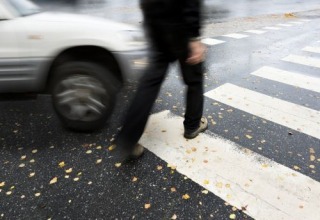
If you find yourself in a situation where you were hit by a vehicle or injured at a crosswalk and are dealing with injuries, things can get complicated in a hurry. Issues like fault, responsibility, and insurance payouts are rarely as clear-cut as you’d like them to be.
While pedestrians generally have the right of way in crosswalks, fault determination involves multiple factors. Understanding how liability gets assigned in crosswalk accidents can help you protect your rights and pursue appropriate compensation.
The General Rule: Pedestrian Right of Way
In most jurisdictions, pedestrians have the right of way when crossing in marked crosswalks. Drivers must yield to pedestrians who are in the crosswalk or about to enter it. This fundamental rule creates a presumption that drivers who hit pedestrians in crosswalks are at fault, but that presumption can be overcome by evidence showing the pedestrian violated traffic laws or acted negligently.
The strength of your right-of-way claim depends partly on the type of crosswalk. Marked crosswalks with painted lines create clear visibility and stronger pedestrian rights. Unmarked crosswalks at intersections also provide right of way, though some drivers don’t realize these exist. Mid-block crosswalks may have different rules depending on your location, and pedestrians crossing outside any crosswalk typically have weaker legal positions.
Traffic signals also dramatically affect right of way. If you crossed with a “Walk” signal, you had a clear right of way and the driver who hit you is almost certainly at fault. If you crossed against a “Don’t Walk” signal, you violated a traffic law. This significantly weakens your position even though drivers still have a duty to avoid hitting you if possible.
When Drivers Are at Fault
Drivers bear responsibility in most crosswalk accidents because they’re operating massive vehicles and have increased duties to watch for pedestrians. Common driver fault scenarios include failing to yield when required, distracted driving that prevented them from seeing you, excessive speed that made stopping impossible, running red lights or stop signs, and turning without checking the crosswalk.
Driver negligence is particularly clear when they violated traffic laws. For example, if the driver was texting or speeding through a school zone, their liability is clear. Same goes for driving under the influence.
Even when you might have contributed to the accident in some way, drivers can still be primarily at fault if they had a clear chance to avoid hitting you. If a driver saw you in the crosswalk but failed to stop or swerve despite having time and space to do so, they may retain some level of liability even if you technically shouldn’t have been crossing at that moment.
When Pedestrians Share Fault
Up until this point, we’ve discussed the driver’s liability. But it’s important to note that you can be partially or entirely at fault for a crosswalk accident in certain situations. Jaywalking or crossing against signals are the most common issues. If you crossed against a red light or “Don’t Walk” signal and a driver with a green light hit you, you’ll almost certainly bear some or all of the responsibility.
Suddenly entering the crosswalk without giving drivers time to react can also create pedestrian fault. If you darted into the street without warning, drivers who couldn’t reasonably stop may not be liable. The standard is whether a reasonable, attentive driver could have avoided the accident given the circumstances.
Comparative and Contributory Negligence
How fault gets divided between you and the driver depends on your state’s negligence laws. Most states follow comparative negligence rules, allowing you to recover damages even if you were partially at fault. Your compensation gets reduced by your percentage of fault. If you were 30 percent responsible for the accident, you can recover 70 percent of your damages.
A minority of states still follow contributory negligence rules, which are far harsher for injured pedestrians. In these jurisdictions, if you were even one percent at fault, you cannot recover any compensation at all. This makes establishing complete driver fault absolutely critical in contributory negligence states.
Modified comparative negligence states fall somewhere in between. In these jurisdictions, you can recover damages only if you were less than 50 percent (or sometimes 51 percent) at fault. If your fault equals or exceeds the threshold, you recover nothing. Understanding your state’s specific rules is essential for evaluating your case.
Protecting Your Rights After a Crosswalk Accident
If you’re hit at a crosswalk, take specific steps to protect your legal rights. Get medical attention immediately, both for your health and to document your injuries. And make sure you call the police to create an official report.
Whatever you do, don’t admit fault or make detailed statements about what happened to insurance adjusters before consulting an attorney. What seems like an innocent explanation can be twisted to suggest you’re partially responsible. Insurance companies will use anything you say to minimize their payout.
Finally, consult with a personal injury attorney like Bednarzlaw.com who is experienced in dealing with pedestrian accidents. As we’ve shown above, these cases involve complex questions of fault, damages, and law. Having a professional on your side ensures your rights are protected and you receive the fairest compensation for your injuries.