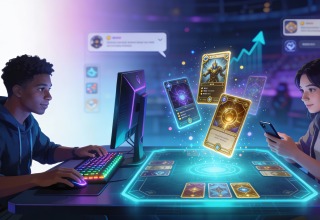
Digital card games are making a comeback because they fit the way people play right now. You can get a real match in a short window, make meaningful decisions, and stop without losing your place. You can see the demand clearly in mobile-first card titles. Pokémon Trading Card Game Pocket crossed $12 million in revenue within days of launch.
But revenue and interest only turn into long-term play if the game feels “alive” whenever you open it. That depends less on the cards themselves and more on the infrastructure around them, like matchmaking speed, active player pools, and reliable opponent availability. In other words, the comeback sticks when the game is ready, whenever you are.
Poker Proves Why “Always-on” Card Games Keep Players Coming Back
Poker is a simple way to see what makes digital card games stick. According to poker expert Blaise Bourgeois, traffic and player pools decide whether tables stay active, especially outside peak hours. That matters because, without a steady flow of players, even the best-designed card game stops feeling playable the moment you log in.
That’s also why Australia is a good lens here: There’s strong demand for online poker, but access isn’t concentrated in one fully domestic market. Many active rooms operate offshore, and players are spread across different networks, which makes traffic and player pools especially important.
Seen together, poker shows how little margin there is in modern card games: when access to real opponents slows down, engagement fades quickly, but when traffic holds, the game becomes part of a daily routine.
The Same Demand Shows up Everywhere
In North America and Europe, card games never really left. Ranked formats still attract players because progress comes from choices, not fast reflexes. You can get better by learning matchups, reading patterns, and managing risk. That’s a different kind of skill game, and it suits people who don’t want a high-speed shooter session after work.
In many parts of Asia, the strongest card titles behave like commuter games. They’re built for short, repeat sessions and quick matchmaking. Ten minutes is enough time for a real match, which makes the genre easy to fit into daily routines.
Short Sessions Are The Real Growth Engine
Card games fit short play windows because they end cleanly. A hand wraps up. A round finishes. You can stop without feeling cut off, which matters when most people play in small gaps during the day.
Good design makes those gaps feel worth it. The best card games load fast, get you into a match quickly, and teach you as you play. They also keep the next step clear, so you’re never stuck wondering what the game wants from you.
This is where card games often hold players better than bigger genres. A lot of popular titles demand long sessions, coordination with friends, and keeping up with frequent changes. Card games can stay satisfying without any of that because the core loop stays the same: make a choice, see the result, queue again.
Trust is The Make-or-Break Factor
Card games survive on players believing the deal is fair. If they get the impression that the shuffle is rigged, or they suspect bots, they tend to leave quickly.
That’s why serious platforms put effort into making outcomes easy to review and spotting bad behaviour early. Reviewability is practical stuff like hand histories, match logs, and replays, so players can retrace what happened instead of guessing.
The UK Gambling Commission requires licensed remote operators to submit game and RNG test results via its games register, which is one way the industry proves randomness is being independently tested rather than simply claimed.
Streaming Helped Card Games Grow
Card games are easy to watch because the choices are visible. Viewers can follow what’s happening and understand why a move matters, even if they don’t know every card in the pool. That makes the tension readable, which is half the battle on a live stream.
It also makes learning simple. People pick up patterns by watching someone else play, then try it themselves because the game doesn’t look overwhelming. And card games naturally produce shareable moments: a bluff that lands, a top-deck that saves a run, a single turn that flips the result. Those clips spread well, which helps these games get discovered without massive marketing.
Hybrids Pulled Card Games Out of The Ladder Trap
A big reason digital card games are back is that cards escaped the “ranked ladder or nothing” model. Developers started using card systems as the decision layer inside roguelikes, tactics games, and co-op runs. That change widened the audience fast, because it removed the feeling that you have to keep up with a meta to enjoy the game.
It also solved a common burnout issue. Traditional ladders can become a burden the moment seasons, patches, and tier shifts start stacking up. Hybrid deckbuilders don’t ask for that kind of constant maintenance. They stay fresh because each run plays out differently, and winning is often about solving the situation you’re dealt, not grinding the same matchup for points.
You can see how durable that model is in the long tail. Slay the Spire hit an all-time concurrent peak of 57,025 players on 27 December 2025, years after launch. That’s a strong signal that “cards + runs” is a format people come back to.
Conclusion
At its best, a digital card game gives you a real problem to solve in a short amount of time. You can outthink someone without needing perfect reflexes. You can improve without grinding endless hours. That combination is hard to beat in a market where many popular games demand long sessions, constant updates, and social coordination. All card games ask for is attention and decision-making.