You’re making six figures streaming on Twitch. Maybe seven if you’re crushing it on YouTube or pulling sponsorship deals. And then tax season hits.
Suddenly, that $200,000 income looks more like $120,000 after Uncle Sam takes his cut. And if you’re a professional gambler or esports competitor? The 2026 OBBBA rules just made things worse, potentially taxing you on winnings you never actually kept.
But here’s something most gamers don’t realize: your physical location determines your tax bill more than anything else. Move to the right country, and you could legally slash your tax burden to nearly zero while improving your quality of life.
That’s not tax evasion—it’s tax optimization. And for professional gamers, streamers, and content creators earning serious money, it’s becoming essential.
Why Gaming Professionals Are Looking Abroad
The United States isn’t exactly gamer-friendly when it comes to taxes. Professional streamers face effective tax rates of 30-40% when you factor in federal, state, and self-employment taxes. Esports competitors deal with complicated prize money reporting. And crypto earnings from play-to-earn games? That’s a tax nightmare waiting to happen.
Pennsylvania just tried pushing sports betting taxes to 54%. Failed, thankfully, but the writing’s on the wall—governments see gaming income as low-hanging fruit.
Meanwhile, several countries actively court digital professionals with zero income tax, fast internet infrastructure, and residency programs designed for remote workers. The gaming industry generated $184 billion globally in 2023. Smart jurisdictions want their piece—but they’re competing on favorable terms.
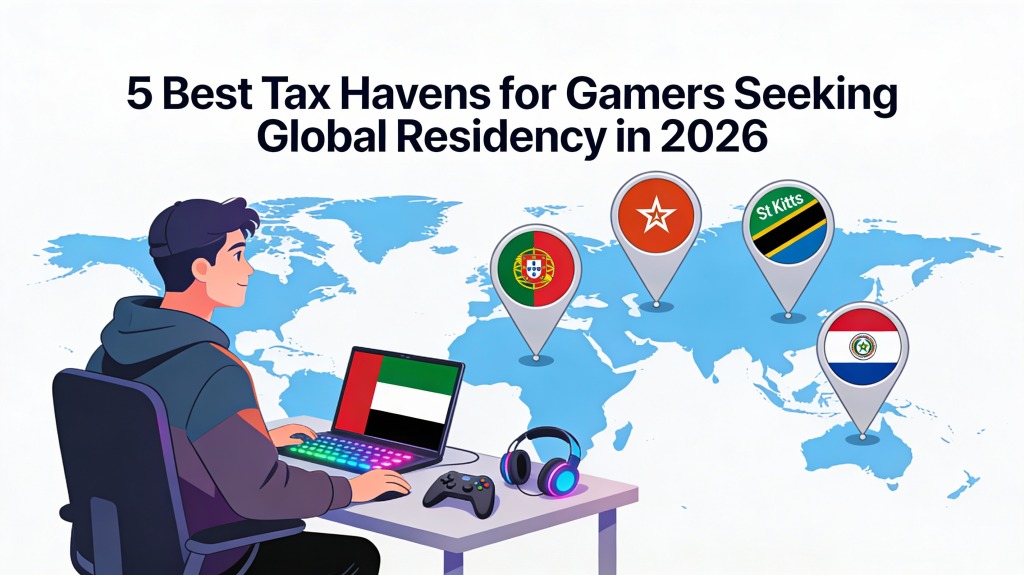
The 5 Best Tax Havens for Gamers in 2026
1. United Arab Emirates (Dubai)
Dubai tops the list for one massive reason: zero personal income tax. None. Whether you’re earning $50,000 or $5 million from streaming, tournaments, or sponsorships, you keep every dollar.
The UAE recently launched a Golden Visa program specifically targeting remote workers and digital professionals. Invest AED 2 million (roughly $545,000) in property or establish a business, and you get a 10-year renewable residency. No tax residency requirements forcing you to stay 183 days per year, either—90 days annually maintains your status.
Infrastructure matters for gamers, and Dubai delivers. Average internet speeds exceed 200 Mbps. Multiple tier-one data centers ensure low latency for competitive gaming and streaming. The city hosts major esports tournaments, creating networking opportunities.
Downsides? Cost of living runs high. But when you’re keeping 100% of your income instead of 60%, the math works differently.
2. Portugal (D7 Visa & Golden Visa)
Portugal built a reputation among digital nomads, and gamers are catching on. The country offers two relevant pathways: the D7 passive income visa and the Golden Visa program.
Through the D7, you need roughly €760 monthly in passive income—easy if you have consistent streaming revenue. The Golden Visa requires €250,000-€500,000 in real estate or fund investments, but grants you EU residency without living there full-time.
Tax-wise, Portugal’s Non-Habitual Resident (NHR) regime used to offer a flat 20% rate on professional income. New rules in 2024 tightened this considerably, but gaming income still qualifies for favorable treatment compared to standard Portuguese rates of 48%.
More importantly: Portugal gives you EU access. Stream from Lisbon, attend gaming conventions in Berlin, vacation in Barcelona—all visa-free. Internet averages 100+ Mbps in major cities, with fiber widely available.
The Global Residence Index reports Portugal remains popular among their gaming and tech clients despite recent NHR changes, particularly for those prioritizing EU mobility alongside tax efficiency.
3. Malta
Malta might be small, but it punches above its weight for gaming professionals. The country explicitly targets digital workers through its Nomad Residence Permit, requiring just €2,700 monthly income to qualify.
Tax residents pay a flat 15% on foreign-sourced income under certain programs, significantly better than most EU nations. And since many streamers and content creators earn through platforms registered outside Malta, a substantial portion of income qualifies.
Malta’s gaming industry credentials run deep—the island hosts major online gaming companies and has hosted esports events for years. English is an official language, eliminating communication barriers. Internet infrastructure supports streaming and competitive gaming without issues.
Being an EU member matters. Schengen access, European banking, and the ability to expand across the continent all come standard. For gamers building brands that might pivot into business ventures, Malta’s pro-business environment helps.
4. St. Kitts and Nevis
St. Kitts offers something unique: citizenship, not just residency, through investment. Starting at $250,000 (donation to Sustainable Island State Contribution), you get a second passport with zero income tax obligations.
No capital gains tax. No inheritance tax. No wealth tax. Your gaming income, investment returns, and crypto gains all remain untouched. The country doesn’t even have tax treaties that might complicate your situation.
The catch? You need to actually want Caribbean island life. Infrastructure lags behind Dubai or Portugal. Internet exists and works for streaming, but expect 30-50 Mbps rather than fiber speeds. Competitive gaming with strict latency requirements might prove challenging.
However, for high-earning gamers prioritizing tax elimination and wanting a backup citizenship for global mobility, few options beat St. Kitts. The passport grants visa-free access to 150+ countries. Plus, there’s no residency requirement after obtaining citizenship—you can live wherever you want.
Understanding St. Kitts and Nevis tax implications proves crucial before committing, as maintaining US tax obligations depends on whether you renounce American citizenship. More details can be found at https://globalresidenceindex.com/st-kitts-and-nevis-taxes/.
5. Paraguay
Paraguay flies under the radar, which makes it interesting. The country offers one of Latin America’s easiest permanent residency programs—deposit $5,000 in a local bank, and you qualify.
Territorial taxation means only Paraguay-sourced income gets taxed. Since streaming platforms, tournament organizers, and sponsors typically operate outside Paraguay, most gaming income escapes taxation entirely. Even if some income qualifies as local, rates cap at 10%.
Cost of living runs incredibly low. A comfortable lifestyle in Asunción costs $1,500-2,000 monthly, including rent, food, utilities, and entertainment. Internet speeds reach 100+ Mbps in cities, adequate for most gaming and streaming needs.
The gaming scene remains small, which cuts both ways. Fewer local opportunities exist, but less competition for brand deals and sponsorships in the region. For Spanish-speaking gamers, this matters more.
Paraguay works best as a tax residency base while you travel. Spend enough time to qualify as tax resident, enjoy territorial taxation, but live wherever your gaming career demands.
What Actually Matters When Choosing
Tax rate alone doesn’t determine the best option. You need to consider:
Internet infrastructure: Can you reliably stream? Compete? Your career depends on connection quality more than tax savings. A 5% higher tax rate but reliable gigabit fiber beats zero taxes with spotty 20 Mbps service.
Time zone alignment: If your audience sits in North America, streaming from Dubai means going live at 2 AM local time. Paraguay or St. Kitts align better. European audience? Malta or Portugal make sense.
Gaming community presence: Some locations offer networking, collaboration opportunities, and local tournaments. Others leave you isolated.
Investment requirements vs. savings: Dropping $500,000 for Portuguese residency only makes financial sense if your annual tax savings exceed the opportunity cost of that capital. Run the actual numbers.
Long-term residency rules: Golden visas often require physical presence days each year. Can you commit to that? Does it disrupt tournament schedules or content creation?
Currency and banking: Getting paid in USD or EUR becomes complicated in some jurisdictions. Paraguay banks might not easily receive Twitch payments. Dubai offers multi-currency accounts seamlessly.
The Process Actually Works Like This
You can’t just pack up and stop paying taxes tomorrow. Proper tax residency changes require planning:
Most countries determine tax residency through the 183-day rule—spend more than half the year there, you’re tax resident. Some use different metrics. Portugal looks at where your “vital interests” lie (family, economic ties, property). The UAE requires just 90 days with a Golden Visa.
Severing US tax residency for Americans demands extra steps. The IRS doesn’t release you just because you moved. Expatriation involves formal renunciation, exit taxes, and ongoing filing requirements. You need specialized advice here—mistakes cost six figures.
For non-Americans, transitioning proves simpler but still requires establishing clear tax residency in your new jurisdiction before cutting ties with your home country.
Working with experienced advisors like Global Residence Index or their parent company Vancis Capital helps navigate these complexities. They’ve guided gaming professionals, streamers, and digital creators through residency programs in over a dozen countries, understanding the unique challenges irregular income streams and international payment platforms create.
What This Means for Your Bottom Line
Let’s run actual numbers. A streamer earning $250,000 annually in California faces roughly $85,000 in taxes (federal, state, self-employment). Net income: $165,000.
That same person as a UAE resident? $250,000 net. That’s $85,000 annually extra—$850,000 over ten years.
Even less aggressive moves help. Portugal’s previous NHR regime would have saved them $60,000 yearly. Malta’s 15% rate still nets $50,000 in savings.
For esports pros with volatile tournament income, tax residency in a territorial taxation country like Paraguay means zero taxes on that $500,000 championship prize. In the US? $170,000 disappears to taxes.
These aren’t hypothetical savings—they’re real money you can reinvest, save, or spend improving your content quality.
Final Thoughts
Tax optimization isn’t about hiding money or breaking rules. It’s about legally restructuring your life to align with jurisdictions that treat gaming professionals fairly.
The gaming industry exploded in the last decade. Tax codes haven’t caught up—most still treat streamers like traditional employees, and professional gamers like hobbyists. Meanwhile, forward-thinking countries actively court digital professionals with favorable policies.
You built a career doing something most people said was impossible. You beat the odds, grew an audience, maybe even went pro. Now it’s time to protect what you’ve earned by making smart residency choices.
Just remember: tax residency changes carry real legal consequences. Get it wrong, and you face double taxation, compliance nightmares, or worse. Do it right, and you keep more of what you earned while potentially improving your quality of life.
This article provides general information about tax residency options for gaming professionals. Tax laws change frequently, and individual circumstances vary significantly. Consult qualified tax advisors and immigration lawyers before making residency decisions. This content should not be considered tax or legal advice.